There is no place like Austin. Even during the scorching summer heat, a distinct rhythm is felt throughout the city. The pneumatic hiss of a Capital Metro bus stopping at the corner, the clink of glasses on a patio, and the soulful, burning funk of live music radiating unapologetically through the walls of a local club all dance in harmony. The electrifying vibrations accelerate from your ears through the soles of your feet, a powerful reminder that this is a place where people still come to truly live. But in a world increasingly viewed through three-second digital clips, context, meaning, and value can be lost. It takes a unique eye to see the people who make this city great, and a passionate soul dedicated to documenting the moments that might otherwise be lost in the live music capital of the world.
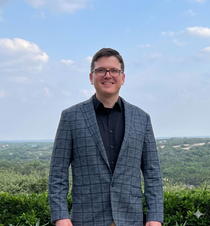
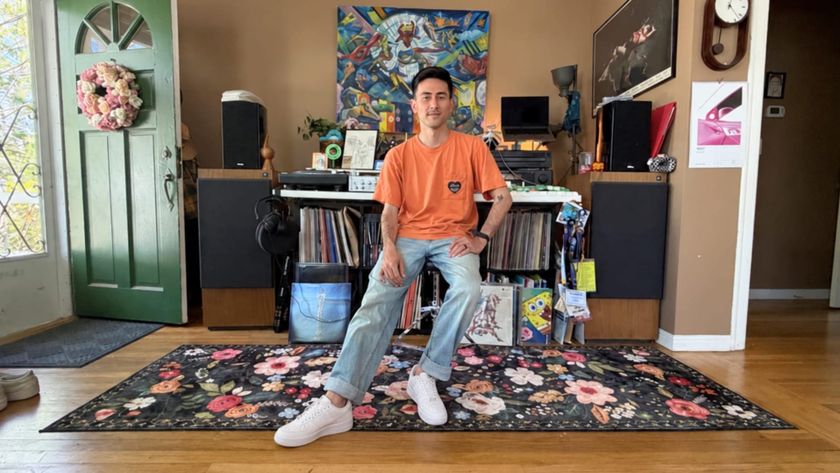
Shunya Carroll is an Austin-based multimedia journalist and photographer who uses his craft to build community and inspire people to participate in local culture. He leverages his background as a former educator, having seen firsthand how a lack of human interaction affects our everyday lives, to champion physical third spaces where diverse groups feel a sense of belonging and have the opportunity to connect offline with one another and with their city.
“Once you go outside and talk to people, even if they're on the other side of the aisle, it's not as crazy as the internet makes it seem. So yeah, that's really what I want people to do — just go outside and talk to people.”
-Shunya Carroll
Shunya’s journey to the heart of Austin’s culture began at the University of Houston, where he earned degrees in biophysics and biochemistry. He brought that expertise to the public school system to promote education, attaining the distinguished position of Stanford University Hollyhock Fellow. He promoted student learning by facilitating their involvement in city events, civic services, and interactions with local leaders, while also bringing students together to collaborate with the Texas Book Festival, the Austin Park Foundation, and local environmental programs.
But his teaching experience became a segue to community-wide impact. In the high school classroom, he witnessed unsettling behaviors that surfaced before the COVID-19 pandemic and returned with even more intensity once students were back at their desks. He watched a generation learn to settle arguments by blocking someone on a screen rather than talking in person. They were finding ways to disconnect from their immediate reality, drawn to a digital world that offered a frictionless escape while slowly eroding their social skills. He also witnessed socioeconomic inequality that limited human interaction. Many of his students often spent a great deal of time caring for younger siblings and taking jobs in their junior high school years instead of going out to experience their city and interact with people outside of their homes.
These observations led Shunya to a transformative perspective on media and how it can break down silos that prevent meaningful human interaction. They also led to the difficult decision of leaving the classroom. But before he could realize his new mission, he had to reinvent himself, so he went back to school.

Shunya enrolled in the University of Texas at Austin Graduate School of Journalism and Media, specializing in augmented story formats that invite audiences to interact with journalism in new ways. He then interned as a Multimedia Journalist for the KUT & KUTX Public Media group before starting his freelance photography career, working on internationally acclaimed events such as South by Southwest and the Austin City Limits Music Festival.
But even in front of the city's brightest and most animated platforms, his focus is intentionally, and perhaps radically, humble. While other photographers at Austin City Limits scramble to capture a headliner, Shunya often turns his back to the stage. He didn't take a single photo of a performer at ACL last year. Instead, he documented the fans who had saved for months to buy tickets and the locals who make the festival possible. He believes these people, whom he describes as invisible, hold real power in our society, yet they rarely appear in the media. For Shunya, the greatest triumph isn't a front-page credit; it's the moment a regular person looks at a photo he took of them and knows they are seen and appreciated.
This profound respect for the individual defines his personal approach to photography, using his camera as a listening tool to honor the unfiltered authenticity of human life. When documenting a public vigil where a camera can often feel intrusive, Shunya chooses to prioritize the person over the spectacle. He bears responsibility for building genuine connections with the people in his frame rather than remaining a distant observer. That’s why he makes it a point to introduce himself and ask for a name, often cropping images to protect anonymity. Through this intentional process, he seeks to preserve human dignity and the quiet truth of a person's experience within a single photograph.
Shunya’s advocacy extends far beyond his camera, as he is a vocal guardian of the Austin music scene. He believes that civic education is a vital anchor for the community. To him, understanding how tax dollars flow and how the city grows is not just about policy; It is about deepening the roots of citizenship. In this landscape, music serves as the ultimate bridge, bringing people together. This belief drives his advocacy within an artistic ecosystem shaped by art, politics, and city policy.
While he recognizes the temporary lifeline of artist grants as an act of support, his focus is on systemic issues, such as soaring insurance costs and the shadow of massive companies working to create monopolies within the music industry. He is concerned about a culture that will drop hundreds of dollars on a superstar while local artists struggle to sell tickets to a ten-dollar show. To combat this, he works as a freelance journalist, filling information gaps and helping creators navigate predatory industry tactics such as paid playlist placements on streaming platforms. By breaking down complex lawsuits and technological disruptions into clear insights, he empowers musicians, venue owners, promoters, record labels, and managers to understand what's happening in their industry. This professional advocacy ensures the work remains viable, allowing creators to stay focused on their mission of creating the music that brings people together.
“My work is focused on the music and the arts industries because I feel like the arts have always been one of the most important pillars of culture and society.”
-Shunya Carroll
Shunya’s advocacy is also deeply rooted in promoting places where all people belong. While bars and clubs struggle to stay in business, Shunya looks toward our libraries and parks as the true heart of the city. He notes that the Austin Public Library creates a rare cross-section of humanity, having observed corporate executives congregate within feet of people with limited access to outside technology. He says it’s one of the few places where facets of society collide, creating a sense of belonging for all people regardless of class and profession.
This dedication to Austin’s shared spaces is the ultimate expression of Shunya’s mission to bring people together. He recognizes that while the digital world has its merits, it is the city's physical anchors where we rediscover our shared humanity and find the genuine sense of belonging that an algorithm can never replicate.
In a city changing as fast as Austin, and at a moment when most of us are being trained to see the world in three-second clips, Shunya Carroll reminds us that real human connection is what truly matters. He has positioned himself as someone the live music capital desperately needs, a gifted storyteller and documentarian who slows down, quietly captures subtle nuances, and shows us that starting with a simple hello is a beautiful gift to our neighbors and community.
© 2026 Keep Austin Human. All rights reserved.